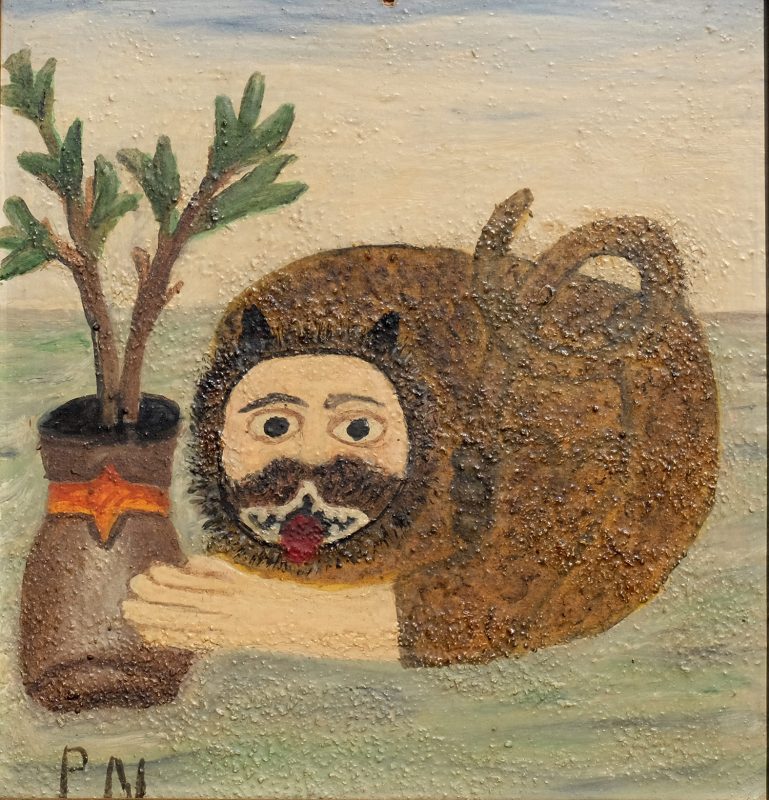
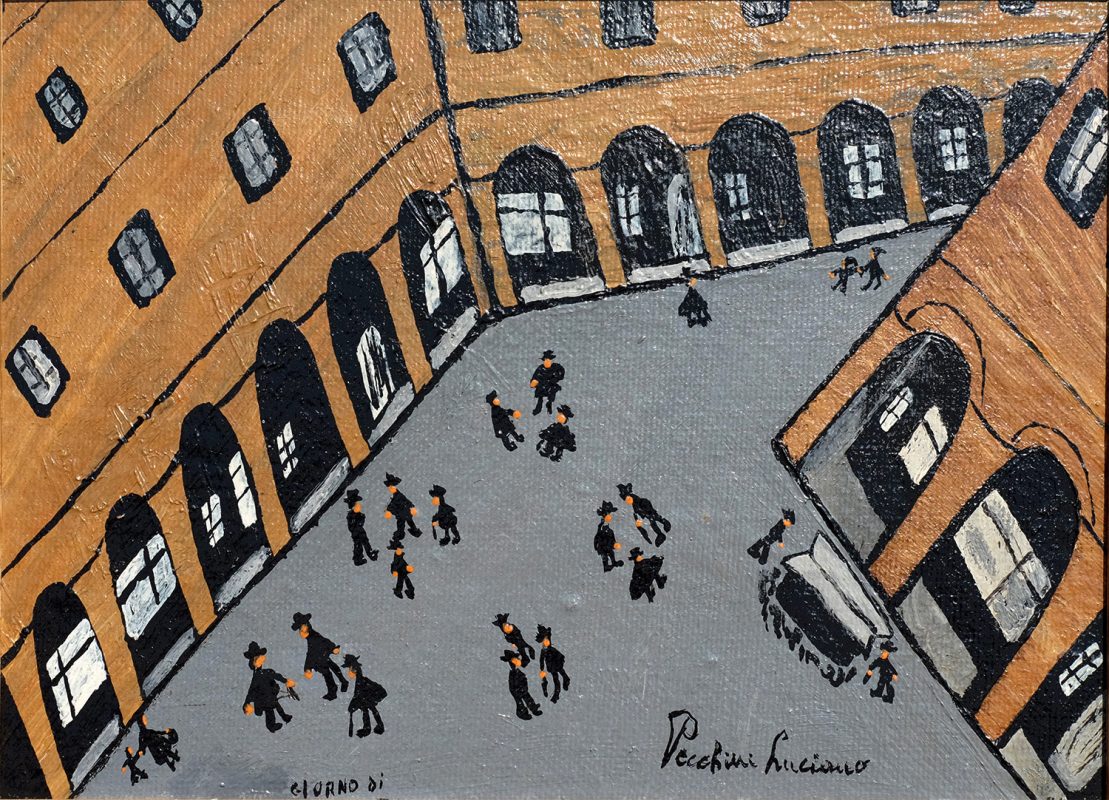
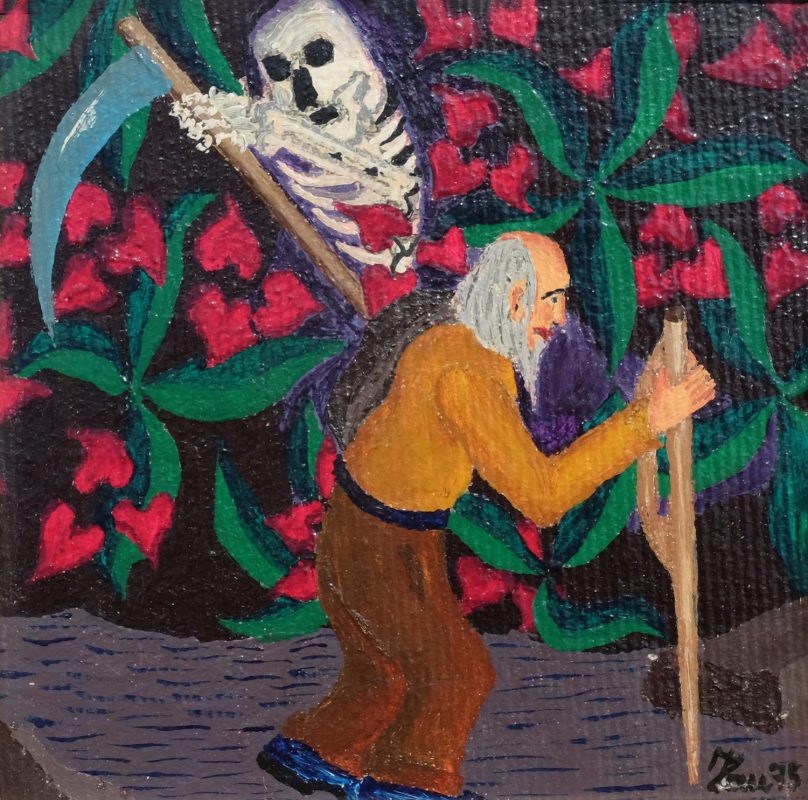
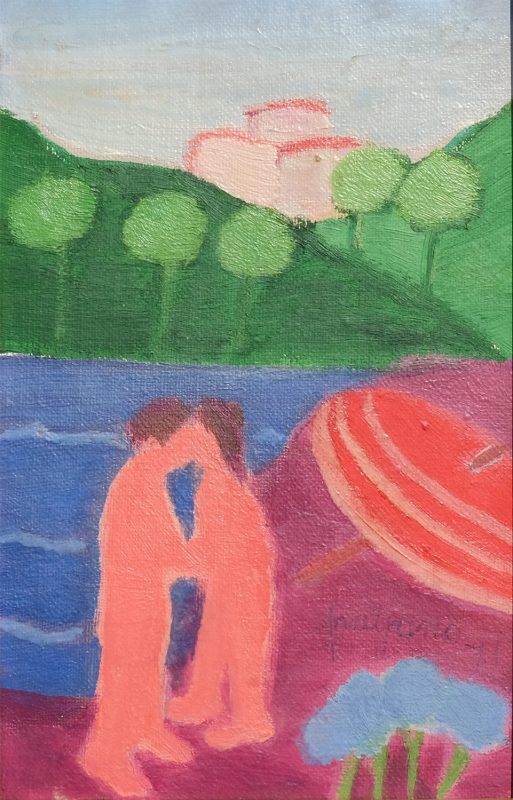
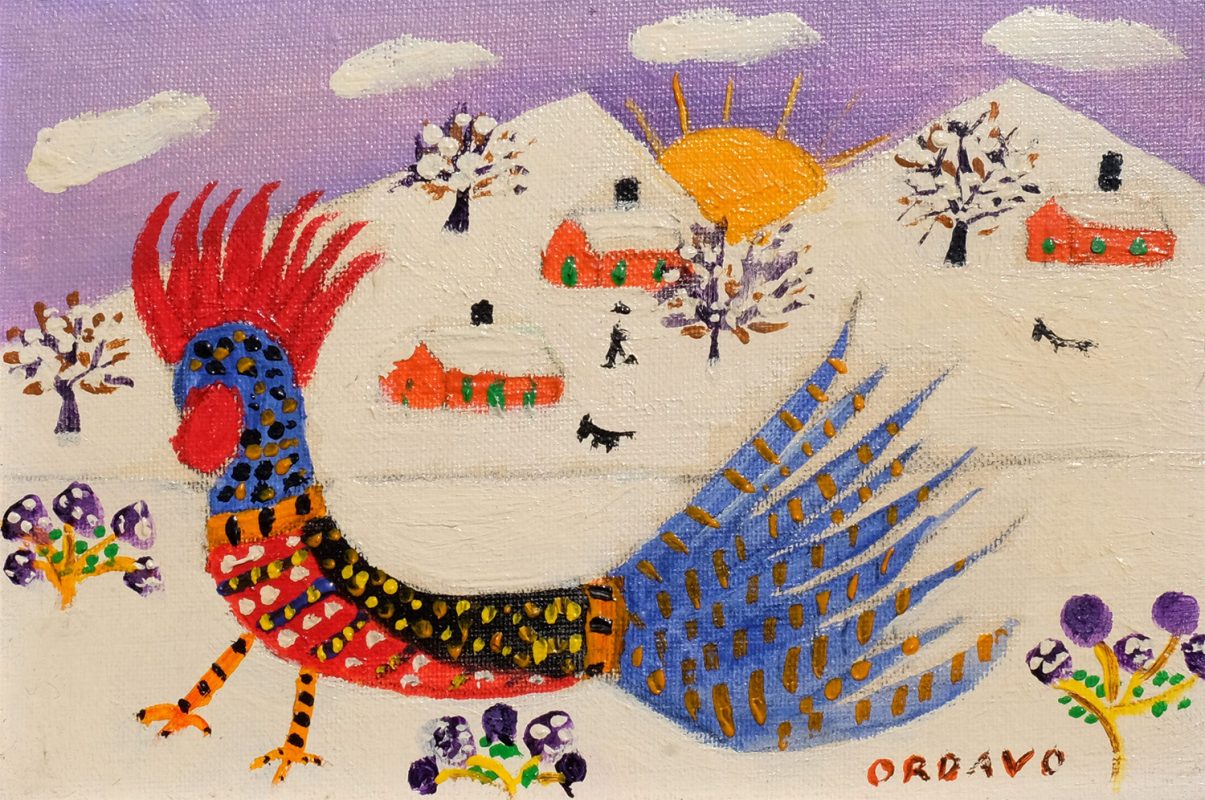
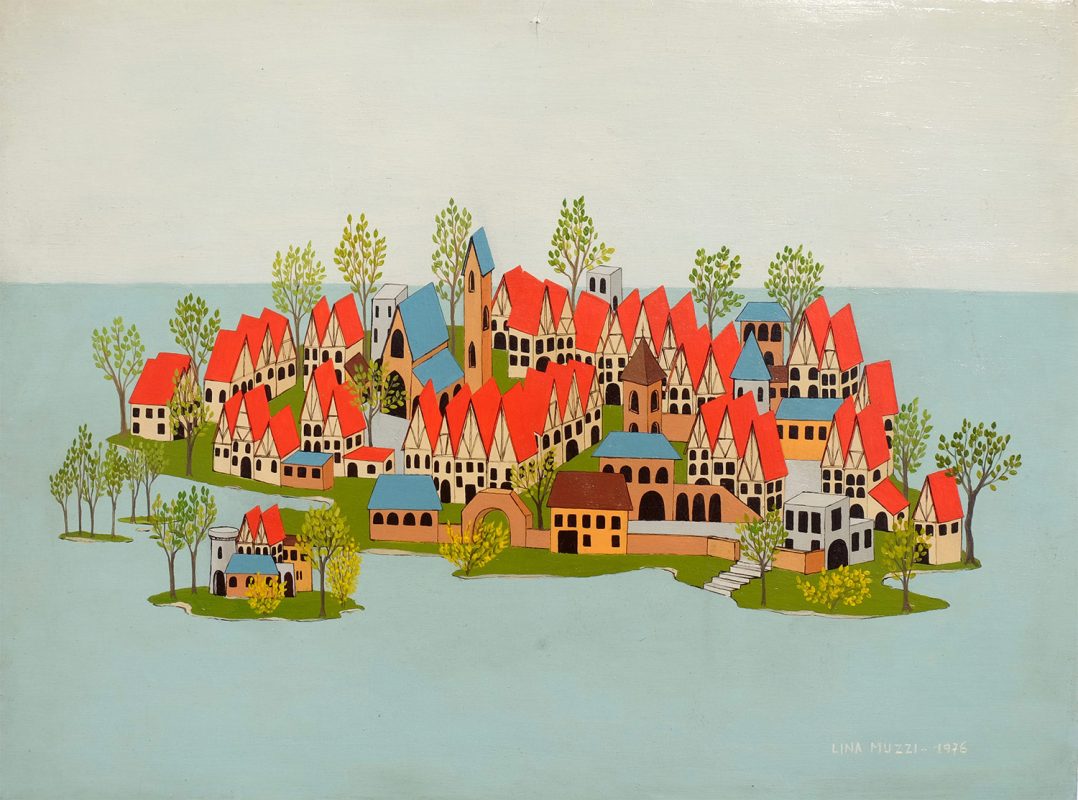
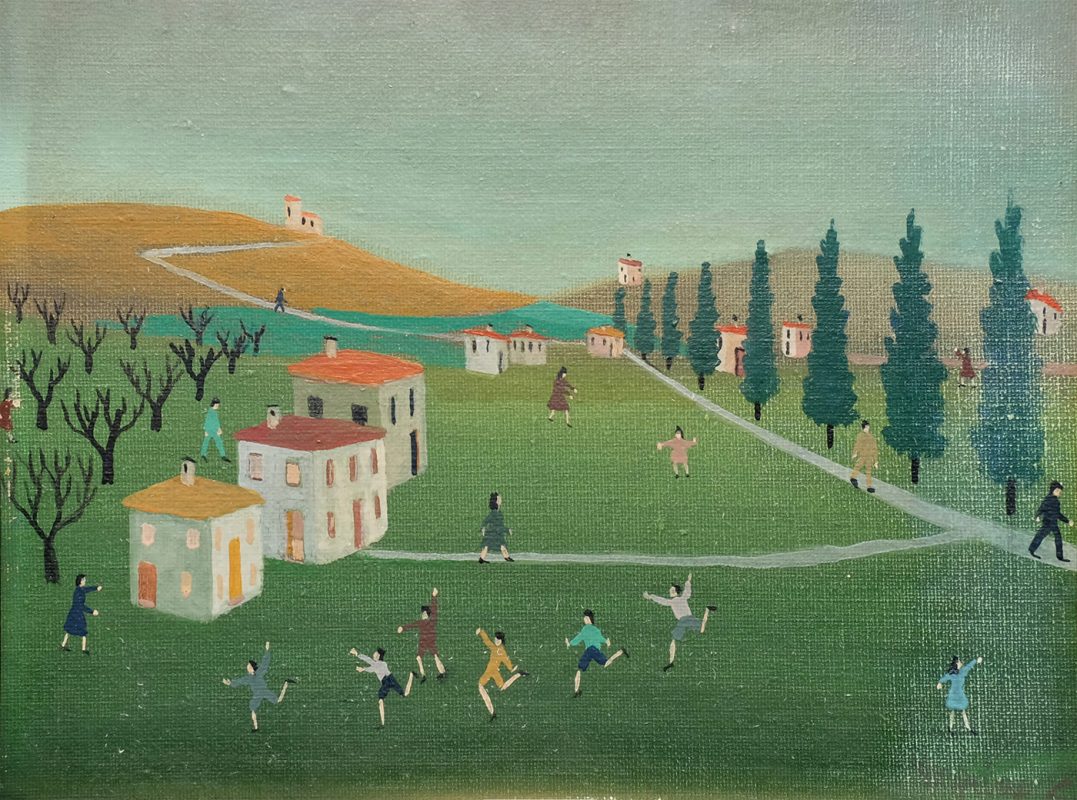
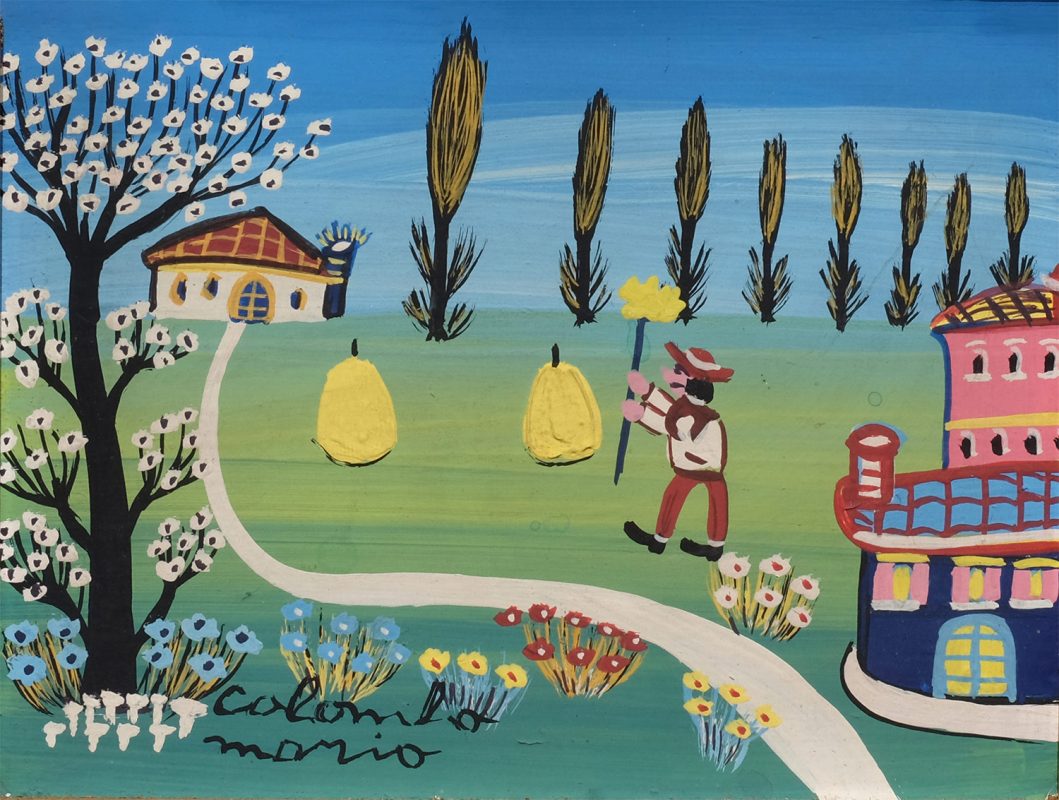
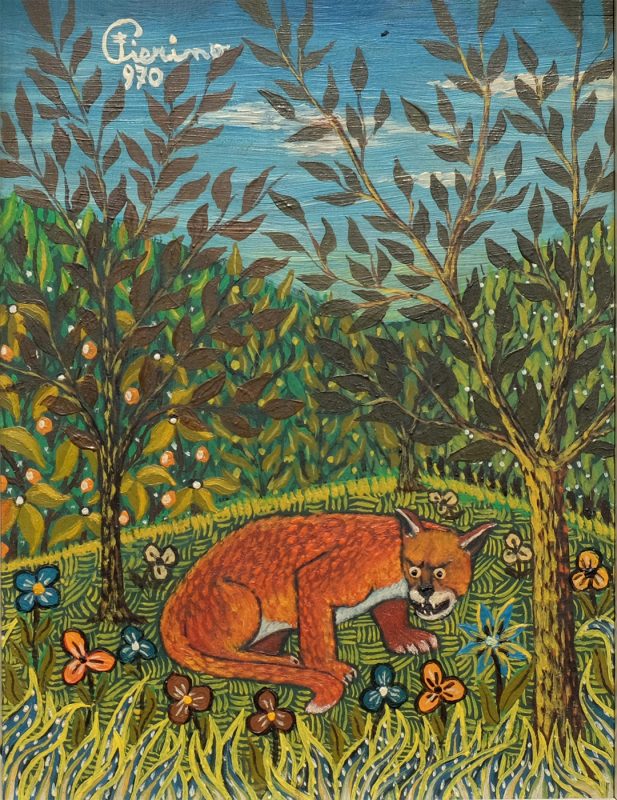
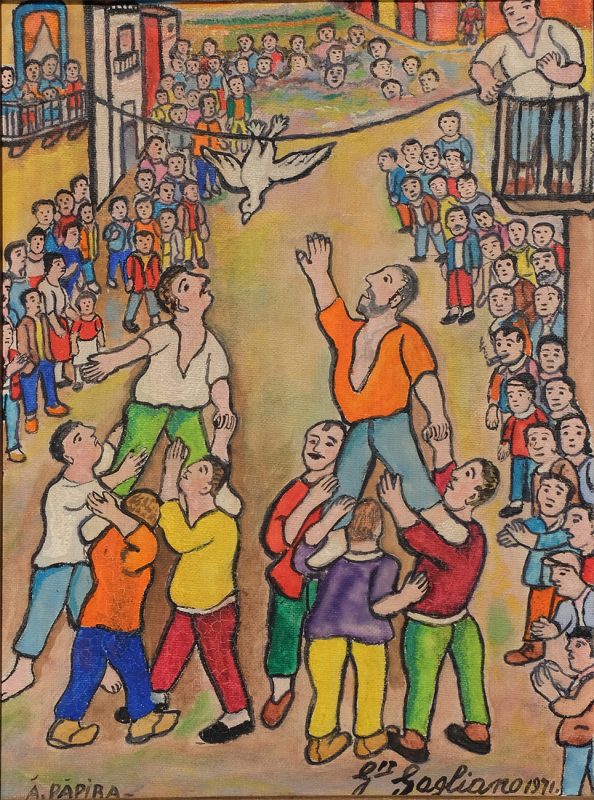
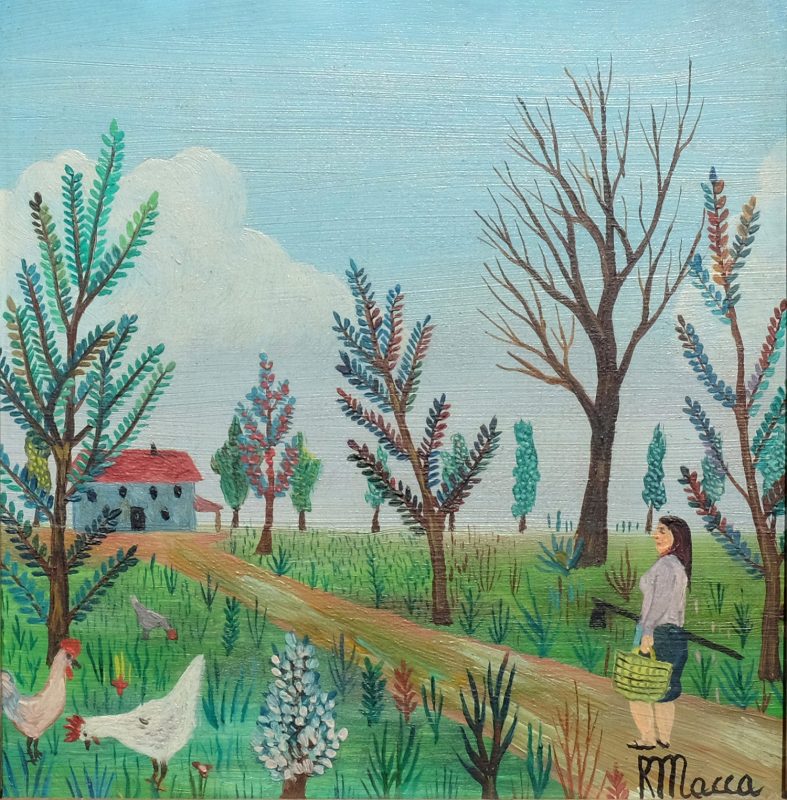
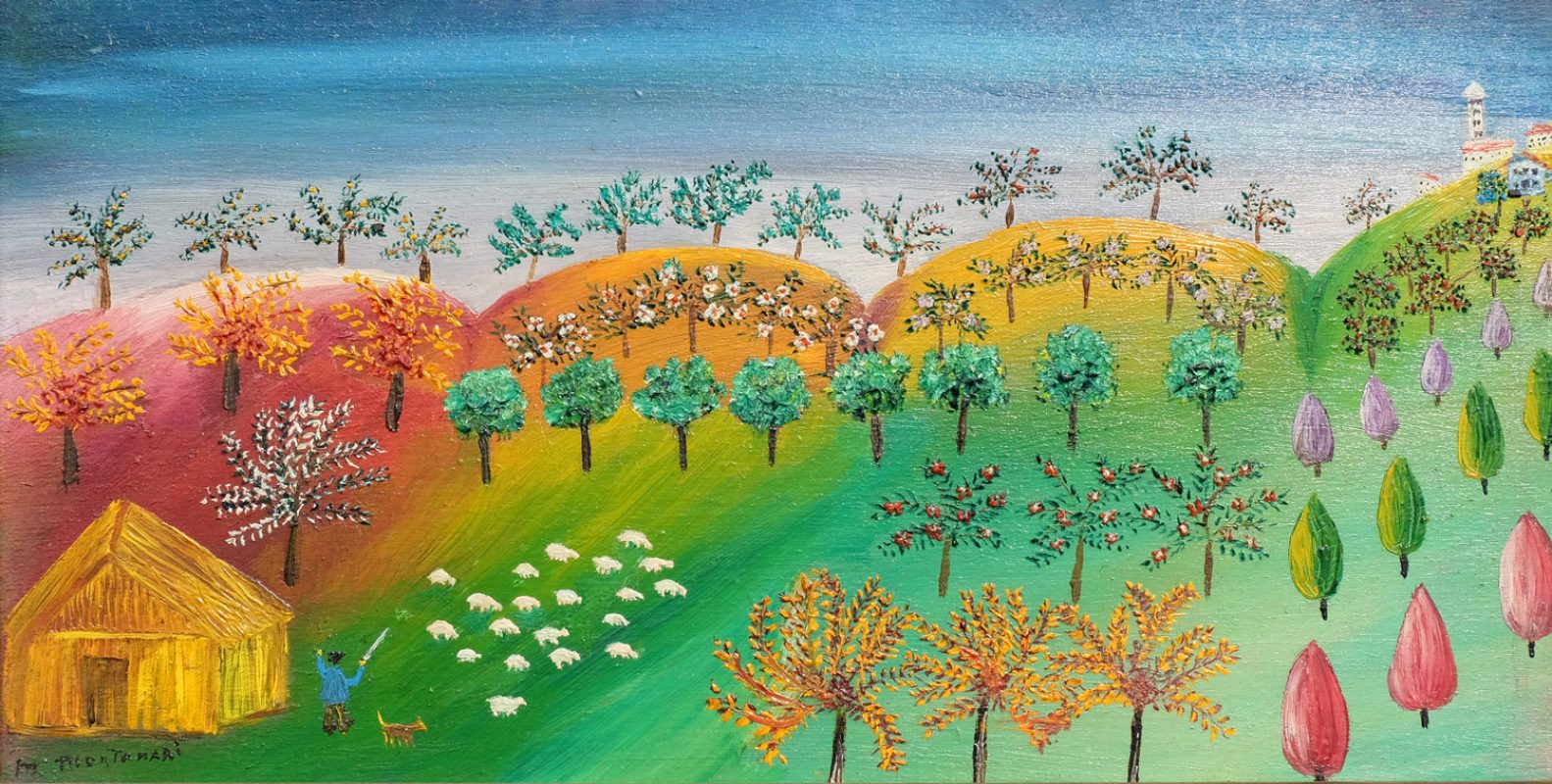
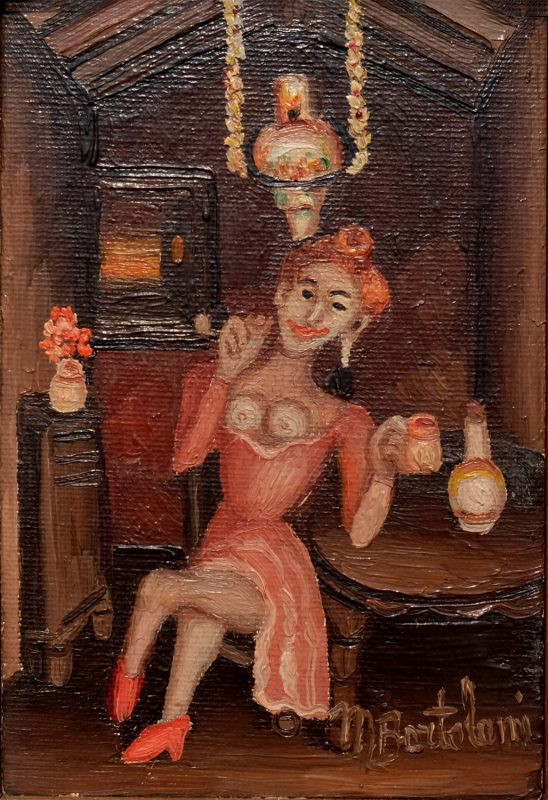
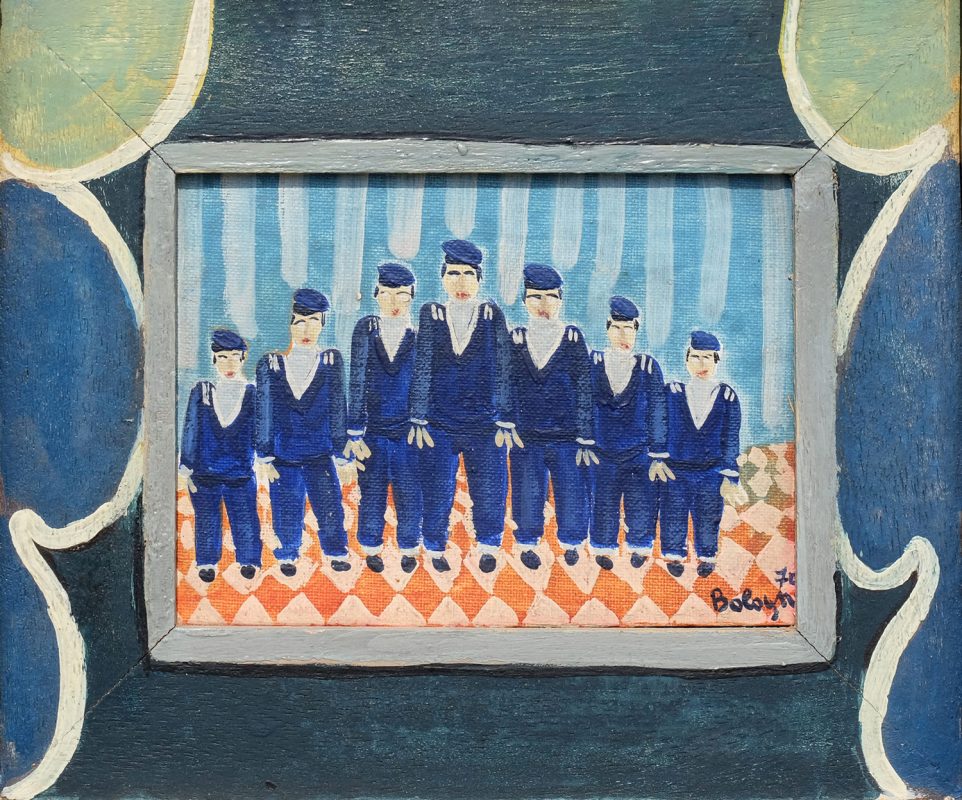
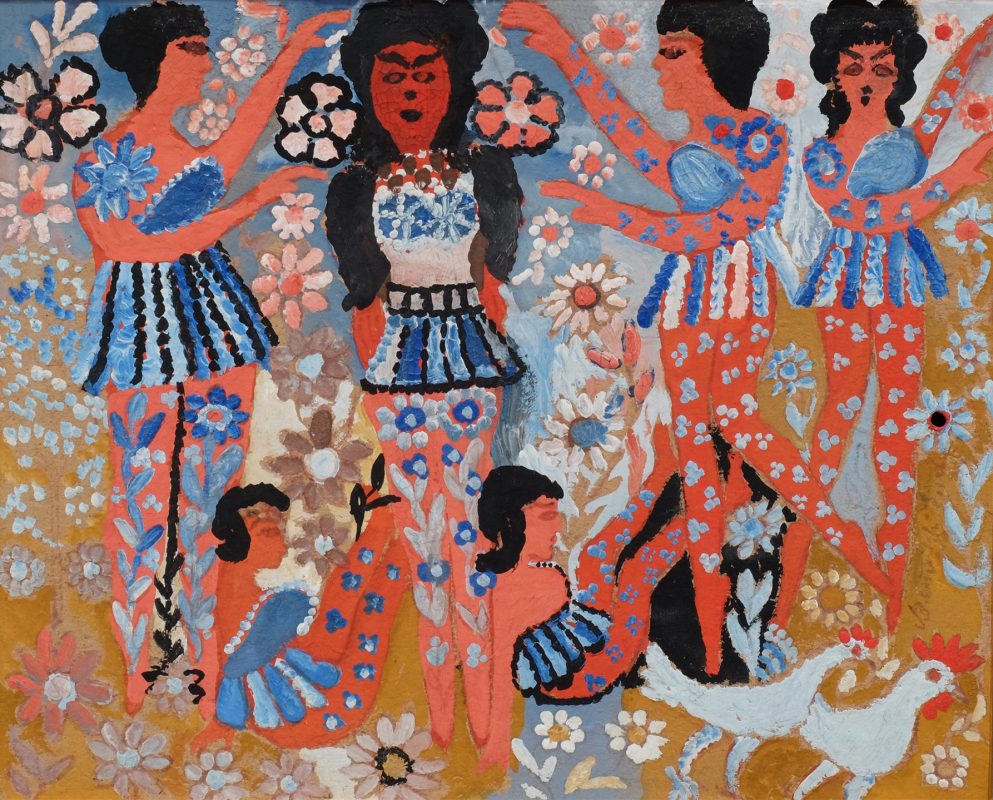
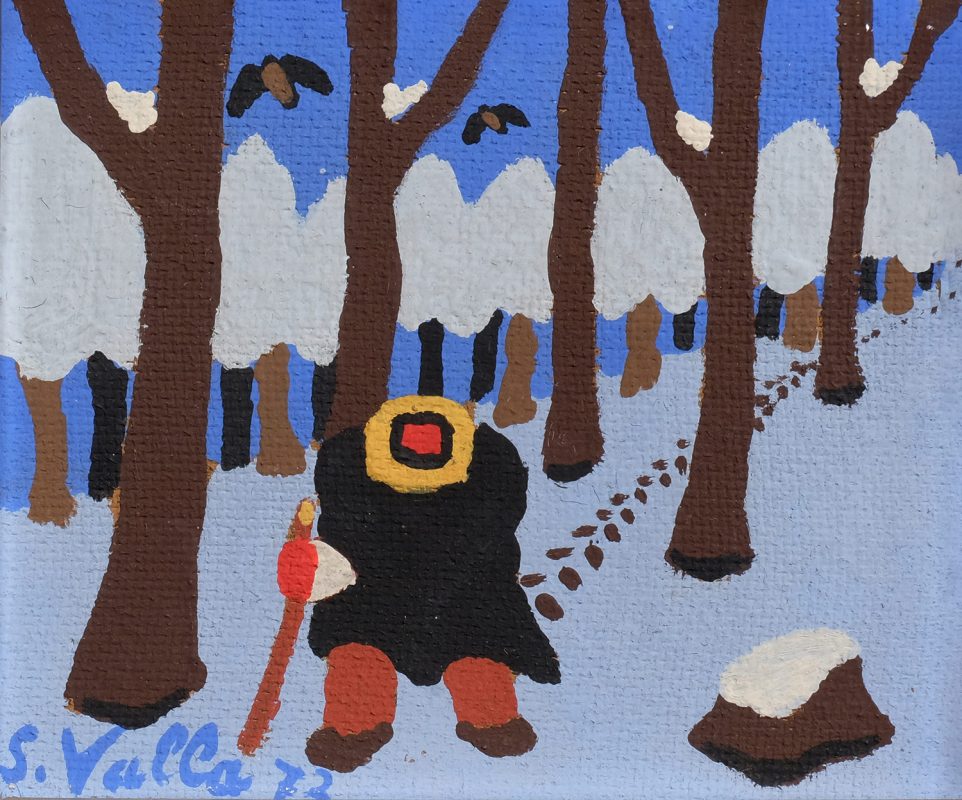
The exhibition features around forty small-format Naïve works from the Dino Menozzi collection.
They have been described as innocent, dreamers, prophets of the past, and primitive. Yet the phenomenon of Naïve art is far from homogeneous. As Cesare Zavattini (writer, screenwriter, and leading promoter of Italian Naïve art, who founded the C. Zavattini National Museum of Naïve Arts in Luzzara, Reggio Emilia, in 1967) points out, there is a strong presence of ‘idyllic painting’, when ‘nature is seen as an ideal place of peace and serenity’, Zavattini writes in the preface to “I Naïfs italiani”, “artists are not farmers but office workers, laborers, housewives’. Theirs is an ‘approximate’ nature that lacks ‘vegetal truth’. If the painter is a farmer, he is not inclined to idyllic painting. ‘Its nature is richer and more vital’ Zavattini continues, ‘the whole is less dreamy and full of earthly moods… We are faced with a strong, elemental realism’. Then there is the countryside populated by witches and devils, ‘…and hence the texture of a particular rustic, grotesque surrealism’. Many Naïf artists speak of anecdotal painting too, expressing themselves with ‘episodic painting with a moralistic and satirical taste’, balancing irony and anguish. It is spontaneous, pure art, but the artists are not amateurs imitating famous artists. They are self-taught, diverse in style but extremely original. A tribute to history. In the 1960s and 1970s, Naïve painting and Art Brut overlapped in Italy, because the phenomenon of Outsider Art was not yet known in our country. So that artists like Ligabue and Pietro Ghizzardi, today leading artists of the national Art Brut movement, were considered Naïf painters at the time.
Most critics of the period agree on one point: overall, Naïve art urges us to reconnect with nature, and thus with ourselves.
Let’s return to the exhibition. “Candid as doves, cunning as serpents”, the title, was suggested to us by Zavattini’s words in a fragment of the documentary “Naïfs of the world: Italy”, 1975, by Gianpaolo Tescari. The exhibition, in addition to displaying the small-format works so dear to the Naïf movement (28 artists are featured), offers the opportunity to consult various volumes and catalogs of that period in the gallery. All material was collected and organized by Menozzi in a collection of books on the subject, previously acquired by the gallery. Special thanks therefore go to Dino Menozzi, who, guided by his instinct and, above all, a strong passion for art, collected works and anecdotes during his forays into the Po Valley. Meticulous research, combined with a desire and awareness of the need to publicize it, led him to the foundation of the quarterly magazine “L’arte naïve” in 1974, which was published until 2002.
Due to space constraints, we will not delve here into the 28 artists‘ biographies. Without ranking them, we will highlight the stylistic originality of some particular artists. Among the most striking are the dreamlike compositions of Enrico Benassi (Casale di Mezzani, 1902 – Parma, 1978); the almost surreal imprint of Mario Bortolami‘s images (Voltabarozzo, Padua, 1924 – 2001); the bold descriptions of hilltop villages that form the backdrop to the memories of festivals and popular traditions of Giuseppe Gagliano (Centuripe, Enna, 1897 – Catania, 1985); the delicate rural poetry, rendered with meticulous detail by Rodolfo Macca (Gualtieri, 1936); the formal elegance in representing urban structures by Lina Muzzi (Bologna, 1929 – n.p.); the atmospheres of ancient castles by Stanislao Ponzi, known as Nello (S. Maria del Piano, Parma, 1897 – 1984); the robust and essential, almost harsh, depiction of the human figure by Toni Roggeri (Pieve Modolena, Reggio Emilia, 1927 – 2003); and finally the particularity in delineating people always with their heads bowed by Serafino Valla (Luzzara, 1919 – Reggiolo, 2014): a way to express the weight of his suffered vicissitudes but also humble submission to the divinity.
Galleria Maroncelli 12 – Milano
Copyright © 2024 – Tutti i diritti riservati